
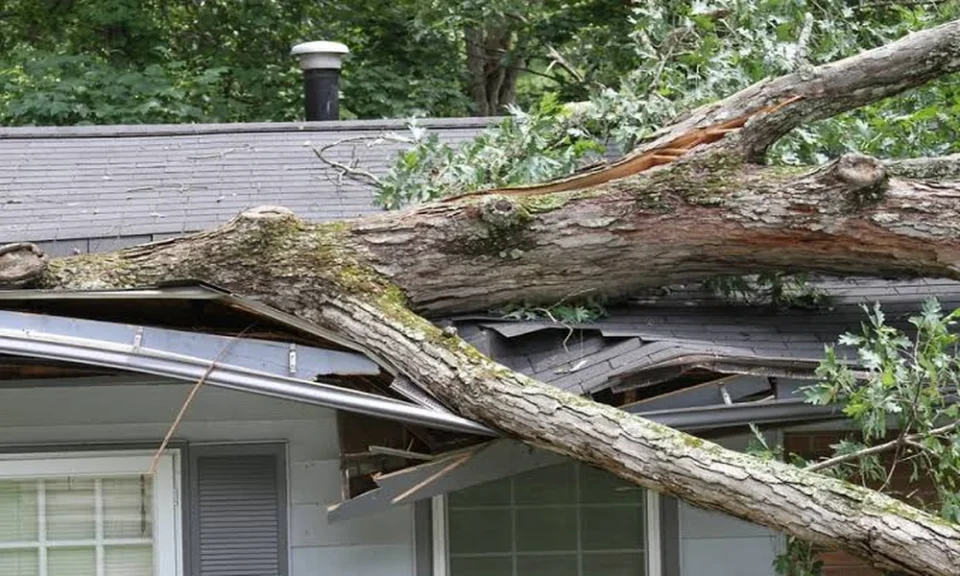
Strong wind doesn’t always leave obvious marks. A roof can look fine from the driveway and still have dozens of shingles with broken seals, ready to peel off in the next gust. A fallen branch is the opposite. The damage is plain to see, but how deep it goes isn’t. A roofer’s inspection is the surest way to know, and homeowners who want one can go here to book it.
Before Anyone Goes Near the Roof
Downed power lines come first. Any wire touching a tree, a gutter or the roof should be reported to the utility, and the area kept clear.
A large tree resting on the house is a job for a tree service, not a roofer. Cutting it off in the wrong order can drop more weight onto the roof. Once it’s removed, the roofer takes over.
Climbing a wet roof after a storm is how many falls happen. Most damage can be checked from the ground, a window or a ladder at the gutter line.
What Wind Does to Shingles
Wind works under the edges. It lifts a shingle, breaks the sealant strip that holds it down, and folds it back. Sometimes the shingle tears off. Sometimes it drops back into place with a crease across it.
- Missing shingles, often near the edges and ridge.
- Creased shingles with a straight line across them, where they bent back.
- Lifted edges along the rakes and eaves.
- Ridge caps cracked or blown off.
- Flashing bent away from a chimney or wall.
- Gutters pulled loose, or downspouts knocked off.
Creased shingles are easy to miss from below. They lie flat again, but the seal is gone. Homeowners unsure what a crease looks like can go here to see roofer photos of real wind damage next to their own pictures.
What a Branch Can Do
Small branches scrape. They knock granules off and leave pale scuff marks, which shorten the life of those shingles.
Heavy limbs do more. They can punch through the shingles and the deck below, or crack a rafter. Signs of a deeper problem include a dip in the roof line where the branch landed, daylight showing in the attic, or creaking from above in the wind.
Gutters take a lot of branch hits too. Dents and bent hangers stop water from draining, which causes its own trouble later.
Temporary Protection
A tarp keeps rain out until repairs can be made. It works best stretched over the ridge to the other side, so water can’t run underneath. Boards screwed along the edges of the tarp hold it down better than nails through the plastic, which just create more holes.
Roofers often do emergency tarping the same day or the next, especially after big storms when many homes are affected.
