
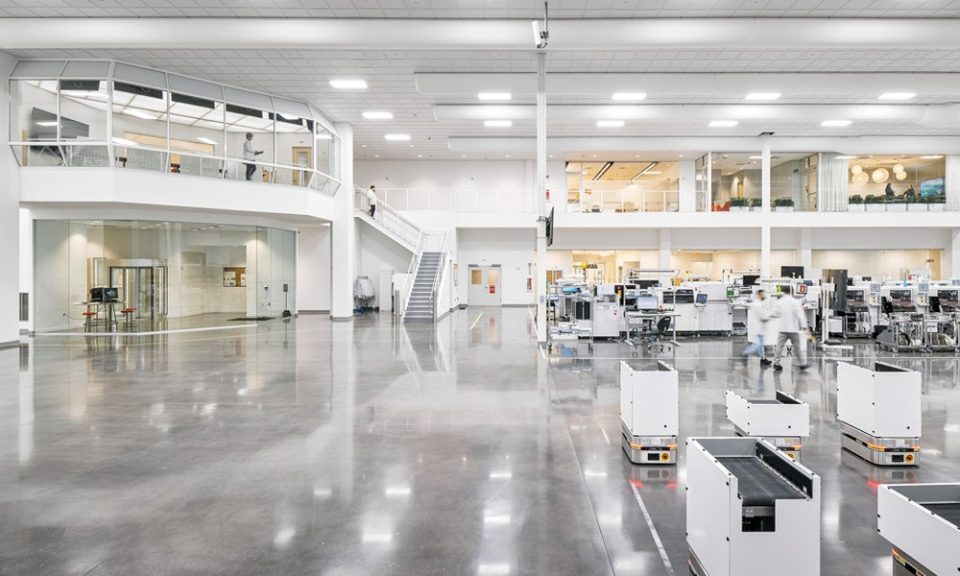
Picture a distribution center that feels more like the nerve center of a high-speed rail system than a dusty warehouse. Every square meter is designed for flow, efficiency, and adaptability. In today’s supply chain environment, spaces like these are not just desirable, they are essential. The right architectural choices can mean the difference between seamless fulfillment and paralyzing bottlenecks.
The Role of Industrial Architecture in Supply Chain Efficiency
Industrial spaces have evolved far beyond four walls and a loading dock. At their core, these facilities are the backbone of distribution, manufacturing, and logistics. They must accommodate enormous inventories, machinery, and a steady stream of workers, all while supporting the technologies that drive modern supply chains. Performance is measured by speed, accuracy, flexibility, and cost-effectiveness. For operators, architectural design is no longer just about sheltering goods. It’s about enabling a supply chain to thrive.
Defining Industrial Spaces and Their Functions
Distribution centers, plants, and data hubs each play unique roles. Some serve as central sorting and cross-docking locations. Others specialize in packaging, cold storage, or order fulfillment. The architectural needs of a pharmaceutical site differ sharply from those of a food processor or a high-tech manufacturer, but all share a common demand: maximum operational efficiency.
Key Performance Metrics in Supply Chain Management
For most organizations, key metrics include:
– Throughput speed
– Inventory turnover rates
– Order accuracy
– Energy consumption
– Overall operational cost
A facility that optimizes these metrics through smart design quickly becomes an asset instead of a liability.
Traditional Industrial Space Designs and Their Limitations
Historically, industrial space design has favored brute-force storage capacity. Rows of racks, narrow aisles, and monolithic warehouses may maximize cubic volume, but they rarely accommodate the rhythms of a modern supply chain.
Layouts Focused Solely on Storage Capacity
In conventional approaches, the focus landed squarely on stacking goods as densely as possible. However, what looks efficient on paper can choke workflows when real-world demand surges or product lines diversify.
Inefficiencies in Material Flow and Worker Movement
Poor layouts force workers and forklifts to cover long distances, introducing delays and fatigue. Inefficient flows increase the risk of errors and accidents, both costly consequences for any logistics operation.
Case Study: Conventional Distribution Centers
Consider the classic big-box distribution center. With inflexible racking and limited support for automation, these buildings often struggle to adapt when business models shift or product mixes change. The cost of retrofitting such structures can rival new construction entirely.
Innovative Architectural Approaches Transforming Industrial Spaces
Today’s leading architects are flipping the script. Instead of imposing operations on a static space, they’re designing around dynamic workflows, future-proofing facilities for rapid change.
Flexible and Modular Design Concepts
Modular layouts make it possible to reconfigure storage, assembly, or packing areas as demand fluctuates. Movable walls, adjustable racking, and multipurpose zones support seasonal peaks without major renovations.
Integration of Technology and Automation-Ready Infrastructure
Smart facilities are built with automation in mind from day one. That means reinforced floors for robotics, clear sight lines for sensors, and integrated cabling for real-time analytics. When the building itself supports automation, the investment in robotics or AGVs pays off faster.
Enhancing Natural Lighting and Environmental Controls
Well-designed spaces harness natural light and control temperature intelligently. This not only improves working conditions but also slashes energy bills. For food processors or pharmaceutical clients, environmental controls become a matter of compliance and product safety.
Comparing Architectural Strategies: Stendel + Reich vs. Conventional Models
A new wave of firms is redefining what industrial architecture can achieve. Among them, Stendel + Reich distribution center architects stand out for their holistic, highly adaptable designs that meet the needs of clients across sectors, including pharma, food, and hi-tech.
| Feature | Conventional Model | Stendel + Reich Approach |
|——————————- |——————————|———————————-|
| Layout Flexibility | Static, hard to reconfigure | Modular, scalable zones |
| Automation Readiness | Minimal | Built-in from design stage |
| Environmental Controls | Basic | Advanced, sustainable systems |
| Industry Adaptability | Limited | Customized to sector needs |
Project Highlights: Distribution Centers and Data Hubs
Their portfolio spans distribution centers for major retailers, pharma plants, and data hubs, each tailored to operational realities and future growth.
Impact on Operational Velocity and Accuracy
By prioritizing spatial optimization, these designs help teams work faster and more accurately, reducing delays and picking errors.
Adaptability to Diverse Industries
Projects in food processing require robust environmental controls, while hi-tech sites demand ultra-clean conditions and fast reconfiguration. Stendel + Reich’s solutions flex to meet each need.
How Better Architecture Drives Supply Chain Resilience
Well-conceived spaces are resilient to disruption. By reducing bottlenecks and supporting real-time data flows, architecture becomes a key lever in supply chain performance.
Reducing Bottlenecks through Spatial Optimization
Logical layouts with clearly defined zones keep products and people moving smoothly, reducing congestion during peaks.
Facilitating Real-Time Data and Inventory Management
Sensor-rich infrastructure and open sight lines make live inventory tracking and quick decision-making possible.
Sustainable Design and Long-Term Cost Savings
Green building methods, efficient lighting, and climate systems save money over a facility’s lifespan, while also supporting corporate sustainability goals.
Challenges and Trade-Offs in Architectural Innovation
Innovation comes with trade-offs. State-of-the-art facilities require higher upfront investment, and retrofitting older spaces to modern standards can be an uphill climb. Regulatory compliance adds complexity, while diverse stakeholder needs must be balanced at every step.
Future Trends: The Next Frontier for Industrial Space Design
Tomorrow’s industrial spaces will be smarter, greener, and more connected. Expect fully integrated IoT systems, buildings that anticipate demand shifts, and designs that incorporate cross-docking and multi-modal logistics at the core.
Conclusion: Strategic Architecture as a Competitive Supply Chain Advantage
Industrial architecture is fast becoming a strategic weapon in supply chain management. The difference between lagging behind and leading often starts with how a facility is designed. In a world of rapid change, the smartest space wins.
